
Why I Switched to a Multi-Chain Browser Wallet (and Why Rabby Worth a Try)
Why I Switched to a Multi-Chain Browser Wallet (and Why Rabby Worth a Try)
Whoa! Right off the bat: wallets used to bore me. Really? Yeah. My first crypto days were chaotic — multiple extensions, a sticky mess of private keys in notes, and the nagging fear of clicking the wrong approve button. I’ll be honest: that part bugs me. Something felt off about constantly juggling accounts across chains. My instinct said there had to be a smoother way… and then I found a workflow that actually helped.
Okay, so check this out—multi-chain wallets aren’t just a shiny badge anymore. They matter because DeFi lives across networks now. Short hops between Ethereum mainnet, layer-2s, and sidechains are normal. Medium-latency bridges and different token standards show up in everyday use. And if your wallet makes that feel clunky, you bail. No one likes friction.
I used to think a single-network wallet was fine. Initially I thought simplicity meant sticking to one chain, but then realized that limited scope costs time and money, especially when gas fees spike. On one hand, a single-chain setup keeps things simple; on the other hand, you miss opportunites that live on other chains. Hmm… it’s tradeoffs, and somethin’ in me wanted the best of both worlds.
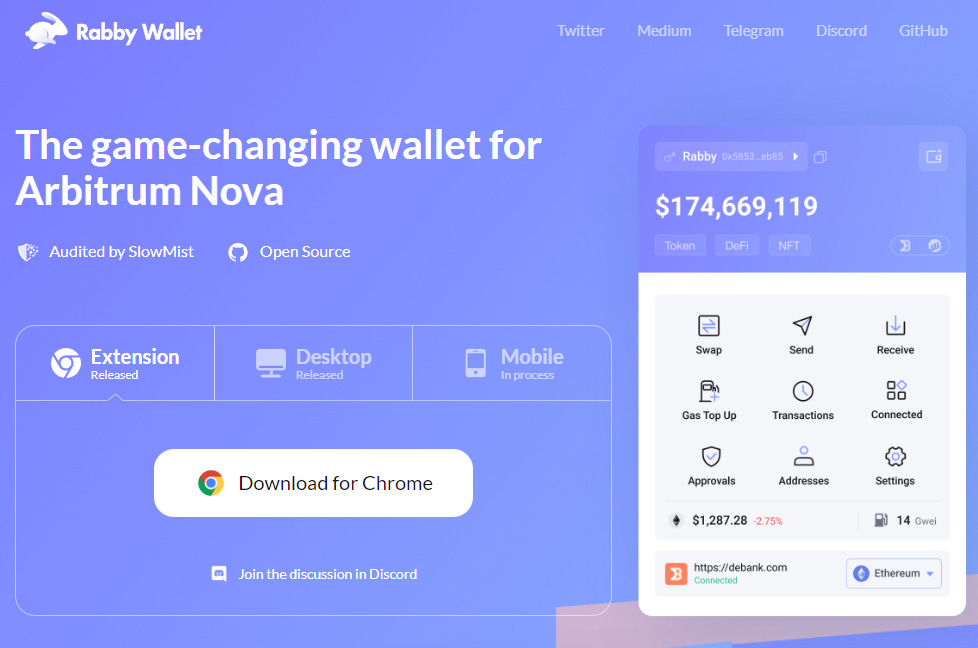
A practical look: what a good multi-chain browser wallet actually needs
Short answer: speed, safety, and clear UX. Medium answer: a wallet that manages permission requests smartly, gives you per-site controls, and doesn’t make every transaction feel like a leap of faith. Longer answer: you want identity separation, chain-aware gas estimates, token discovery that doesn’t spam you, and sane defaults so you don’t ruin a trade by accidentally approving an infinite allowance.
Here’s what bugs me about some wallets. They ask for every tiny permission and explain almost nothing. They use scary words without context. They overload you with alerts that are all the same color. Seriously? No. You need clear distinctions: “this is a signature”, “this is an approval”, “this could allow draining”. My instinct said a better UX should treat these differently, and that’s what I looked for when testing options.
When I installed Rabby I was idly curious. I wasn’t expecting fireworks. But the first impression mattered: it grouped approvals, had a transaction simulation feel, and allowed per-site account mapping. Initially I thought it was just another extension, but then realized the small decisions—like a readable transaction preview and the ability to set gas on a per-chain basis—made daily use less nerve-wracking.
Listen, usability is part of security. If the wallet hides critical info behind jargon, people click through. If it shows clear, plain-language warnings and gives sane options, they pause. That’s where a wallet like Rabby stood out to me. You can check it for yourself here: https://sites.google.com/cryptowalletextensionus.com/rabby-wallet-download/
On a technical note, multi-chain support isn’t just adding networks to a list. Medium-level engineering problems include provider switching, chain-specific nonce handling, and managing transaction fees that vary wildly depending on the network. Longer technical threads involve error messaging: when a tx fails on Arbitrum versus BSC you want different follow-ups. Devs who compress that complexity into a single, coherent UI save users time and mistakes.
There was a moment when a failing bridge transaction almost cost me a trade. My wallet UI had given me a vague error and a gas slider that didn’t reflect the true state of the target chain. Wow! I learned the hard way to appreciate wallets that simulate and explain failures. That lived lesson shifted my priorities away from flashy features toward pragmatic reliability.
Trust is social as well as technical. I talked to friends in NYC and folks in the Valley. Their baseline expectation was simple: “Can I recover my seed? Can I export only what’s necessary? Will I be safe from phishing?” Those conversational checks matter. A wallet can be technically secure but still feel unsafe if basic UX makes recovery or account separation awkward. I’m biased, but the small details matter more than big claims.
On one hand, custodial solutions remove the fuss. On the other hand, you lose sovereignty. My approach: keep self-custody but minimize cognitive load. Use a browser extension that lets me quickly switch accounts, lock permissions by site, and simulate approvals so I don’t accidentally sign a permit that gives infinite allowance. There’s a comfort to that kind of control—calmer mornings when I’m making trades.
Something else — and this is a minor tangent — when you’re onboarded in a coffee shop with shaky wifi, a wallet that tolerates intermittent connectivity without corrupting state is lifesaving. (Oh, and by the way, the coffee was bad.)
Common questions (and my short answers)
Is a browser extension wallet safe?
Short: yes, if used carefully. Medium: Extensions are secure if you control the seed and use hardware wallets when possible. Long: avoid storing large stashes on a browser extension alone; instead use it for active funds and pair it with a hardware wallet or cold storage for large holdings. Also watch for malicious sites — permission hygiene matters.
Why not just use MetaMask?
MetaMask is the default for many, and it’s good, but it’s not perfect for every workflow. Some wallets, like Rabby, prioritize multi-account mapping, permission management, and clearer transaction previews, which can reduce mistakes. Initially I used MetaMask, but later appreciated wallet UX tweaks that reduce human error.
How do I test a wallet safely?
Start on testnets or with tiny amounts. Use a burner account first. Medium-term: simulate transactions using the wallet’s preview tools. Long-term: integrate a hardware key for larger moves. If something smells off, pause and re-evaluate… don’t muscle through a suspicious approval.


